
Powered By



More options exist now than ever before for managing lung conditions like chronic obstructive pulmonary disease (COPD). In COPD, airway inflammation restricts the amount of air you can breathe in and out of your lungs.
Sign up to view the results!
 Continue with Facebook
Continue with Email
Continue with Facebook
Continue with Email
Many COPD treatments are inhaled to deliver medicine directly to the airways and lungs. These medications are often referred to as inhalers.
Inhaled medications work to fight airway swelling and inflammation, and they help control COPD symptoms like troubled breathing. Each type of inhaler works slightly differently to help you breathe easier. Your healthcare provider will likely recommend an inhaler to you based on your symptoms and how often you have COPD exacerbations (flare-ups).
How do you know which inhaler is best for you? Here, we discuss the types of inhalers used to manage COPD, as well as important details to consider when choosing an inhaler.
Many medications for COPD are delivered through inhalers. The type of inhaler you need will depend on your symptoms, how severe they are, and how often they occur.
Bronchodilators work by relaxing the muscles around your bronchi (airways). When these muscles are tight, they put pressure on the bronchi, constricting airflow. Bronchodilators relax and widen your bronchi, so air can pass through more easily. These medications come in both short-acting and long-acting forms.
Short-acting beta 2-agonists (SABAs) help manage COPD symptoms quickly, which is why they’re often called rescue inhalers. These medications can help control symptoms for up to six hours, and they start working 15 to 20 minutes after use. SABAs that are given via inhaler include:

Depending on your symptoms, your doctor may recommend using a SABA before you exercise to prevent flares.
To better manage symptoms, some people living with COPD may also need to use long-acting beta-2 agonists (LABAs). LABAs are used once or twice daily to help keep symptoms well-managed over time. These medications work to relax airways for up to 12 hours. Salmeterol (Serevent Diskus) is an inhaled LABA.
Anticholinergics — sometimes called long-acting muscarinic receptor antagonists — also work to relax airway muscles over the long term. These medications block a chemical called acetylcholine, which causes airways to constrict and can also lead to inflammation and excess mucus. Anticholinergics work against this chemical that’s naturally made by the body to keep airways relaxed.
Available anticholinergics include ipratropium bromide (Atrovent) taken up to four times daily, aclidinium (Tudorza Pressair) taken twice daily, and umeclidinium (Incruse Ellipta) or tiotropium bromide (Spiriva) taken once daily. Revefenacin (Yupelri) is delivered via nebulizer once daily.
Depending on your symptoms, your doctor may recommend an inhaler that combines different types of long-acting bronchodilators. Options include:
Corticosteroids — also called steroids — delivered by inhaler can help reduce swelling and irritation of the airways. They’re also useful for preventing COPD exacerbations. If your symptoms flare often, your doctor may recommend inhaled steroids to help manage your condition and improve your quality of life.
To treat COPD, inhaled corticosteroids may be given in combination with long-acting beta agonists or anticholinergics. Treatment with inhaled steroids alone isn’t recommended for people with COPD. Studies have shown that combination steroid-LABA treatment tends to be more effective for reducing COPD flares than LABA alone.
Steroid and bronchodilator combination inhalers include:
Steroid inhalers can cause side effects, such as a hoarse voice and infections of the mouth. To prevent these, always rinse and gargle with water after using your inhaler, making sure to spit out the water rather than swallow it. If your inhaler uses a mask, wash the area around your mouth to prevent skin irritation.
Three main types of devices are used to deliver COPD medications. Which inhaler device is right for you depends on several factors, such as the severity of your COPD.
Most people who need an inhaler will be given a metered-dose inhaler (MDI). These inhalers provide premeasured amounts of medication within a “puff.” To use an MDI, you’ll need to:
Your doctor may recommend that you use your MDI with a spacer — a hollow plastic tube that connects the inhaler to your mouth. When you press down on the inhaler, the medicine enters the spacer first. A couple of deep breaths taken from your spacer will deliver medicine to your airways more effectively than with an MDI alone. Some spacers come with masks that go around your mouth and nose, while others are inserted into the mouth.
Ask your doctor if a spacer is right for you and how best to use it with your inhaler. Make sure to bring up any issues you think you may encounter, such as trouble holding your breath.
For some people, dry powder inhalers (DPIs) can be easier to use than MDIs because you don’t need to coordinate your movements with your breaths. Instead of pressing down to release a puff, a DPI delivers medicine when you breathe in. To use a DPI, you’ll need to:
To use a DPI, you’ll need to inhale quickly and deeply to release the medication. This breathing technique may make it hard for some people to use a DPI. The need to push open the device with one hand and keep it level during use may present issues as well. Note that DPIs may contain very small amounts of lactose, so you shouldn’t use a DPI if you have a severe milk protein allergy.
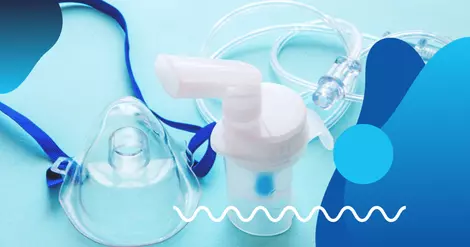
A healthcare professional may suggest you take your COPD medication via nebulizer. This is a machine that converts liquid medication into a fine mist. Along with a cup for medication, a nebulizer is made up of a hose and a mask or mouthpiece. The hose connects to the part of the device that holds the medicine on one end and the mask or mouthpiece on the other.
Unlike MDIs and DPIs, there are no special breathing techniques or abilities required to use a nebulizer. You simply squirt the liquid medication into the cup. Place the mask over your face or enclose your lips on the mouthpiece, then sit and breathe in the medicated mist for 5 to 15 minutes. A nebulizer may be right for you if you have severe COPD or issues that prevent you from using other inhaler devices, such as:
Many medication and inhaler device combinations are available for COPD. The type of COPD inhaler that’s best for you will depend on several factors.
According to the Global Initiative for Chronic Obstructive Lung Disease, doctors should treat COPD based on how severe symptoms are and the risk that they will get worse. Your healthcare provider will take both your symptoms and their typical pattern into account when choosing a medication.
Other factors to keep in mind when deciding on an inhaler device include:
Work together with your healthcare provider to decide on a COPD medication and inhaler device that’s right for you. Make sure to talk to your doctor about any potential issues that may prevent you from using a device effectively. To ensure you get the most from your inhaler, ask your provider to show you how to use it and have them check your technique.
On MyCOPDTeam, people share their experiences with COPD, get advice, and find support from others who understand.
What type of inhaler do you use to treat COPD? Let others know in the comments below.

Still have questions about your condition? I can help.
Get updates directly to your inbox.


Should i use my rescue inhaler everyday?

 Continue with Facebook
Continue with Email
Continue with Facebook
Continue with Email
Continue with Facebook
Continue with Email
Continue with Facebook
Continue with Email
Become a member to get even more





 Join
Join



 Your Privacy Choices

This is a member-feature!
Sign up for free to view article comments.
I am not sure what the treatments are. I use spariva at night along with symbecort twice daily.I also use 0xygen .I can pretty much walk and shop as long as I take an oxygen tank which is cumbersome… read more
We'd love to hear from you! Please share your name and email to post and read comments.
You'll also get the latest articles directly to your inbox.